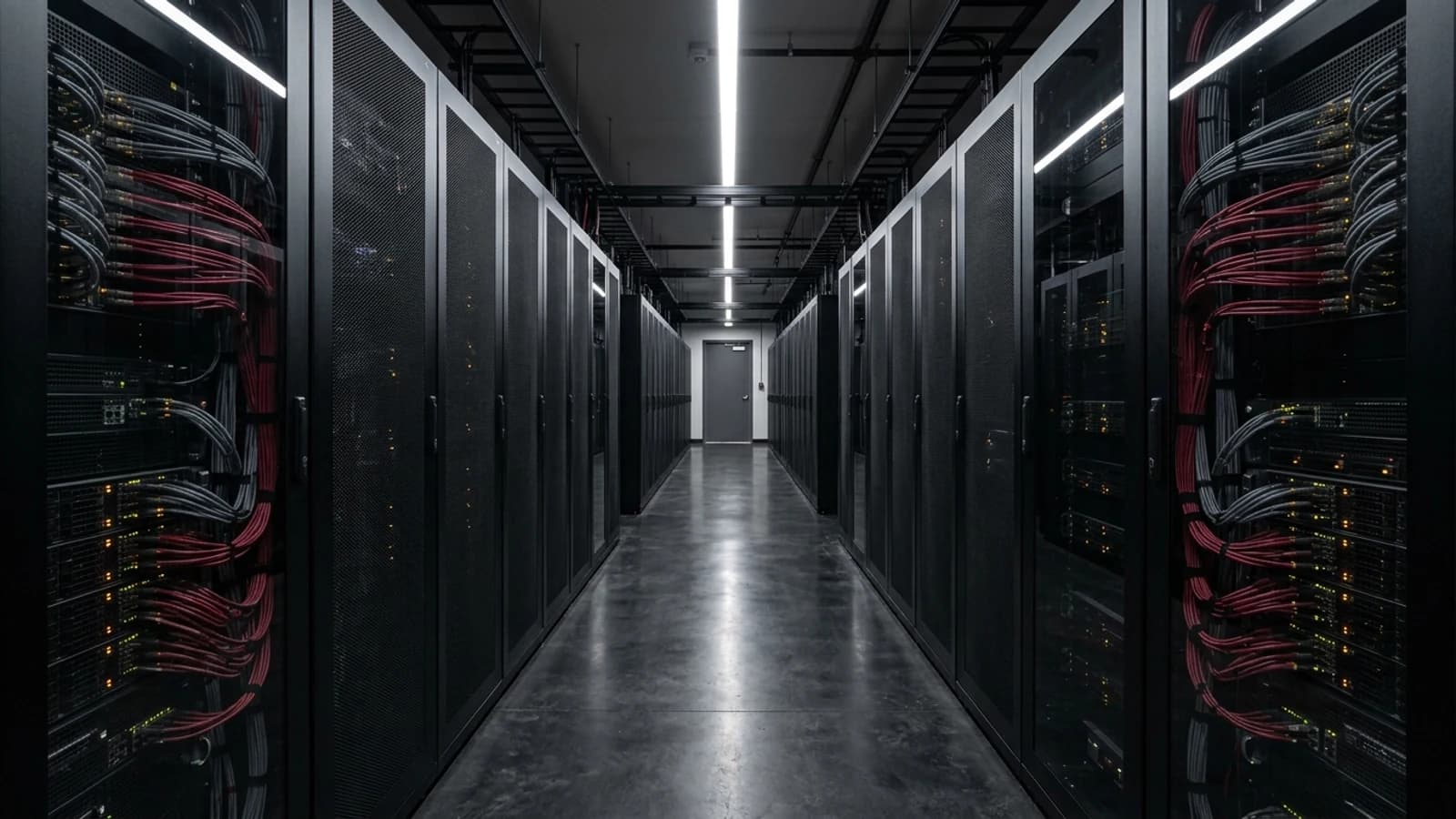


Enterprise artificial intelligence has crossed an irreversible threshold from isolated chat prototypes into interconnected production deployments. Over 1,300 documented real-world systems across eleven industry verticals confirm that competitive advantage now hinges on autonomous execution rather than passive text generation. Leading engineering teams partner with specialized architects to deploy tailored Enterprise AI Solutions that orchestrate cognitive agents across fragmented enterprise data estates, bridging legacy operational debt while enforcing deterministic business logic, strict security boundaries, and auditable corporate governance across high-throughput production environments.
Navigating this systemic transition requires rigorous architectural discipline rather than speculative vendor claims. Technical leaders must evaluate baseline organizational visibility, operational readiness, and systemic vulnerabilities by running our targeted AI & GEO Search Audit Tool before committing capital expenditure. Sustainable agentic ecosystems demand measurable latency thresholds, multi-agent arbitration frameworks, and zero-trust verification pipelines designed to withstand hostile edge-case runtime conditions and volatile regulatory landscapes.
Executive Takeaways and Strategic Findings
- Agentic Production Scale: More than 1,300 documented enterprise deployments confirm that autonomous agents have superseded experimental chatbots, driving deterministic execution across complex, highly regulated global industry sectors.
- Legacy Core Translation: Natural language orchestration layers eliminate multi-year mainframe migrations by querying, transforming, and reconciling siloed relational records across decades-old SAP instances, AS400 systems, and COBOL transaction engines.
- Dynamic Media Generation: High-fidelity multimodal foundation pipelines allow multinational brand teams to translate unified strategic concepts into hundreds of validated, compliant creative assets within compressed operational windows.
- Autonomous Security Defense: Resilient organizations deploy continuous telemetry agents that synthesize threat signatures, isolate compromised cloud execution clusters, inject honeytokens, and execute programmatic remediation actions without manual intervention.
Five Macro Shifts Defining the Agentic Enterprise
The transition toward the agentic enterprise represents a structural realignment of corporate software architecture. Across global supply chains, financial networks, and manufacturing centers, five macro operational shifts redefine how cognitive compute interfaces with legacy relational databases, physical sensor arrays, and regulated human-in-the-loop workflows.
1. Passive Chatbots Evolve into Multi-Agent Task Forces
Isolated conversational interfaces have reached functional obsolescence across demanding enterprise environments. Production architectures now deploy specialized task forces where autonomous agents continuously coordinate operational workloads. Supply chain monitors flag freight disruptions, negotiate rerouting parameters with fulfillment units, and alert financial risk models without human intermediation.
Deterministic supervisor frameworks govern these multi-agent ecosystems through structured arbitration rules. When an inventory allocation agent discovers regional logistics deficits, it triggers procurement workflows governed by programmatic compliance checks. This shift ensures autonomous task completion remains fully aligned with corporate governance standards and auditable financial constraints.
2. Natural Language Becomes the Translation Layer for Legacy IT
Decades of technical debt across banking, insurance, and telecommunications have historically required brittle API wrappers and expensive system overhauls. Modern agentic patterns deploy semantic reasoning engines over legacy infrastructure, transforming natural language inputs into optimized SQL scripts, mainframe queries, and COBOL transaction calls.
Non-technical operational personnel can now extract real-time inventory positions, execute transaction reconciliations, and audit complex policy documents across disjointed database architectures. By bypassing multi-year replatforming initiatives, enterprises unlock institutional data reserves while maintaining existing core stability, enterprise security perimeters, and regulatory compliance standards across critical transactional systems.
3. Computational Media Operates as a Low-Marginal-Cost Creative Studio
Enterprise marketing workflows traditionally suffered from slow production cycles and expensive creative localization bottlenecks. Advanced multimodal models now function as autonomous computational studios, converting unified creative briefs into hundreds of brand-aligned, region-specific campaign assets with near-zero marginal production costs across international consumer markets.
Global enterprises orchestrate continuous asset generation pipelines that programmatically enforce color standards, typography constraints, and regional legal disclaimers. Creative teams transition from manual asset manipulation to supervisory prompt engineering and qualitative oversight, dramatically compressing global time-to-market cycles while expanding contextual personalization across diverse consumer touchpoints.
4. Multimodal Spatial AI Digitizes Physical Operations
Industrial plants, automated distribution hubs, and retail facilities increasingly bridge computer vision and language reasoning through unified spatial architectures. Live camera telemetry, LiDAR scans, architectural blueprints, and industrial IoT feeds merge into continuous multimodal processing streams that comprehend physical geometry and operational causality.
These physical monitoring agents autonomously detect equipment stress, identify personnel safety violations, verify warehouse shelf stocking densities, and trigger robotic material handling systems. By translating raw spatial feeds into structured operational telemetry, industrial operators preempt catastrophic mechanical downtime and optimize throughput across complex logistics networks.
5. Enterprise Cybersecurity Shifts to Agentic Auto-Remediation
Volumetric cyber attacks and sophisticated threat vectors easily overwhelm traditional security operations centers relying on manual incident triage. Forward-leaning security organizations now deploy autonomous defensive agent swarms that continuously parse distributed telemetry logs, detect micro-anomalies, and construct dynamic threat detection signatures in real time.
Upon identifying an active lateral intrusion, these defensive agents isolate affected container nodes, revoke compromised identity tokens, deploy decoy honeytokens, and patch vulnerable configurations programmatically. Human security analysts step into higher-level supervisory roles, reviewing deterministic remediation logs while mitigating systemic vulnerabilities before lateral penetration occurs.
The Six Enterprise AI Agent Archetypes and Taxonomy Matrix
Empirical analysis of production deployments across Fortune 500 enterprises reveals six foundational AI agent archetypes. Each archetype possesses specialized system permissions, distinct cognitive architectures, and explicit operational mandates designed to drive compounding efficiency across customer-facing, engineering, and back-office corporate functions.
- Customer Agents: Execute end-to-end customer resolution workflows by integrating CRM records, billing APIs, and order fulfillment systems, cutting resolution times while maintaining strict brand alignment and compliance standards.
- Employee Agents: Accelerate workforce productivity by indexing internal knowledge repositories, automating human resources benefits processing, and synthesizing disparate IT support tickets to eliminate internal operational drag across distributed corporate divisions.
- Creative Agents: Generate on-brand multimodal marketing collateral, localized campaign assets, and contextual product copy at scale, compressing enterprise production timelines while adhering to strict corporate design and trademark guidelines.
- Data Agents: Synthesize unstructured enterprise document stores, generate optimized analytical queries across multi-cloud data lakes, and surface predictive operational insights to support rapid executive decision-making under shifting market dynamics.
- Code Agents: Modernize legacy codebases, generate automated test coverage, and inspect source control pull requests for security vulnerabilities, driving engineering velocity while upholding strict software architecture and documentation standards.
- Security Agents: Monitor distributed cloud telemetry streams, identify anomalous identity behaviors, synthesize novel detection rules, and execute programmatic threat isolation workflows to harden enterprise attack surfaces against sophisticated exploits.
| Agent Archetype | Core Operational Mandate | Primary Data and System Touchpoints | Governance and Guardrail Model | Verified Enterprise Deployment |
|---|---|---|---|---|
| Customer Agents | Resolve complex user inquiries autonomously across digital and voice channels. | CRM backends, payment gateways, and inventory reservation APIs. | Deterministic guardrails, sentiment escalation paths, and transaction limits. | Mercedes-Benz MBUX |
| Employee Agents | Streamline internal knowledge discovery and administrative workflow execution for teams. | HRIS databases, intranet wikis, and IT service desks. | Role-based access controls and confidential data masking protocols. | Valeo |
| Creative Agents | Produce localized, high-resolution multimedia campaign assets from strategic creative briefs. | Digital asset management platforms and generative media pipelines. | Brand identity validation algorithms and programmatic intellectual property checks. | WPP |
| Data Agents | Convert natural language queries into verified relational business intelligence dashboards. | Enterprise data warehouses, ERP tables, and lakehouse architectures. | Query cost monitors, schema validation, and column-level masking. | Mitsubishi Motors |
| Code Agents | Refactor legacy application modules and automate continuous integration testing cycles. | Git repositories, documentation engines, and continuous integration pipelines. | Mandatory peer-review gates, licensing audits, and static analysis. | Renault Ampere |
| Security Agents | Neutralize tier-one perimeter threats and isolate compromised cloud workloads programmatically. | SIEM infrastructure, identity providers, and cloud workload firewalls. | Zero-trust verification, immutable audit logging, and manual kill-switches. | BMW SORDI.ai |
Seven Global Industry Verticals Deploying Production Generative AI
Scaling autonomous agents out of pilot quarantine demands concrete operational grounding rather than speculative experimentation. Across seven foundational global sectors, forward-looking engineering leadership has moved beyond generic chatbots toward deterministic multi-agent architectures. By examining verifiable enterprise deployments across physical and digital value chains, enterprise technology leaders can extract precise integration blueprints, measurable ROI boundaries, and robust governance models.
1. Automotive & Smart Mobility
Automotive OEMs face fragmented in-cabin software, complex engineering diagnostic workflows, and costly factory floor interruptions. Legacy onboard computing systems fail to interpret unstructured driver intent, while disconnected assembly-line telemetry stalls operational throughput and bloats machine-learning infrastructure expenditures across global manufacturing plants.
Mercedes-Benz deployed Gemini via Vertex AI to drive its MBUX Virtual Assistant for contextual in-cabin navigation and digital storefront interactions. Volkswagen of America implemented a multimodal myVW assistant enabling drivers to query dashboard warning indicators directly using smartphone cameras. Valeo rolled out Gemini Workspace across its 100,000-person global workforce after adopting Code Assist, resulting in over 35% AI-generated software engineering code. Concurrently, BMW Group engineered SORDI.ai on Vertex AI for real-time factory asset 3D digital twins while eliminating 95% of critical cloud security vulnerabilities using Wiz. In manufacturing, Toyota automated operational machine learning to save over 10,000 man-hours annually, and Woven achieved 50% total cost of ownership reductions on autonomous driving workloads.
- Multimodal Telemetry Integration: Unifying edge visual inputs with onboard diagnostics enables instantaneous vehicle defect isolation and contextual customer support.
- Deterministic Factory Simulation: Generating synthetic spatial twin data on enterprise cloud infrastructure reduces physical manufacturing downtime and accelerates model validation.
2. Global Logistics, Freight & Supply Chain
Logistics networks struggle with volatile freight dispatching, manual address reconciliation, and disconnected yard telematics. Disparate enterprise resource planning databases obstruct real-time route optimization, creating delivery blind spots, inflating carrier settlement disputes, and limiting procurement throughput when sourcing critical components across volatile international supply corridors.
UPS operates a real-time digital twin across its global distribution network alongside UPS Capital DeliveryDefense for predictive address confidence scoring. Geotab analyzes billions of daily telematics points across 4.7 million connected vehicles on BigQuery and Vertex AI to optimize fleet safety and fuel efficiency. In Latin America, Domina deployed Vertex AI and Gemini across 20 million annual shipments, improving real-time data accessibility by 80%, eliminating manual reporting overhead, and increasing delivery effectiveness by 15%. Meanwhile, Stord orchestrates fulfillment workflows grounded in over USD 10 billion in annual gross merchandise value, and industrial procurement platform Moglix quadrupled sourcing efficiency across 1,000 manufacturers, scaling quarterly output from INR 12 crore to 50 crore.
- Predictive Dispatch Twins: Correlating live telematics with spatial delivery topologies prevents transit failures and eliminates recurring manual address verification cycles.
- Procurement Pipeline Acceleration: Grounded agent workflows automate supplier reconciliation, expanding transactional bandwidth without proportional headcount expansion across supply chains.
3. Retail, Omnichannel Commerce & Quick-Service Restaurants
Omnichannel retailers contend with disjointed customer service queues, high drive-thru ordering error rates, and fragmented merchandising catalog schemas. Disconnected inventory databases and legacy point-of-sale endpoints impede frontline staff, driving cart abandonment, customer churn, and significant margin erosion during high-volume promotional cycles.
Wendy's deployed Wendy's FreshAI conversational voice ordering across drive-thru lanes, successfully processing complex customized menu requests under high-stress acoustic conditions. Carrefour established AI.Carrefour as an internal associate copilot while using a localized social marketing studio to shrink campaign production cycles from months down to weeks. Across global retail, Victoria's Secret and Target equipped in-store associates with semantic policy and inventory retrieval agents, while Etsy deployed multimodal generative search categorization to catalog millions of dynamic artisan listings with contextual buyer intent.
- Context-Aware Conversational Ordering: Low-latency acoustic voice processing agents execute complex conditional logic without human intervention in high-throughput retail environments.
- Real-Time Catalog Grounding: Semantic vector retrieval across enterprise inventory databases accelerates frontline policy queries and prevents inaccurate customer product commitments.
4. Creative Studios, Media & Global Brand Operations
Global brand networks face unsustainable creative localization costs, inconsistent brand compliance approvals, and slow asset production lifecycles. Marketing operations struggle to deploy personalized, region-specific visual campaigns across programmatic channels without ballooning creative agency expenditures and triggering expensive cross-border copyright, trademark, and style guide violations.
WPP and Authentic Brands Group built computational production factories that generate hundreds of localized, brand-compliant video assets at fractional marginal cost. To demonstrate real-time contextual adaptation, PODS and Tombras engineered the World's Smartest Billboard, dynamically modifying moving truck displays across all 299 New York City neighborhoods in 29 hours using over 6,000 custom headlines. Concurrently, Procter & Gamble integrated generative multi-agent ideation platforms into regional packaging and brand localization workflows, compressing global visual rollout intervals from quarterly sprints to continuous automated releases.
- Programmatic Asset Industrialization: Algorithmic creative generation maintains deterministic typographic and stylistic guidelines while eliminating manual resizing and copy reformatting.
- Hyper-Local Real-Time Targeting: Contextual location streaming allows autonomous creative pipelines to synthesize tailored physical and digital advertisements on demand.
5. Banking, FinTech & Institutional Financial Services
Financial institutions operate under crushing regulatory scrutiny, legacy COBOL core banking silos, and labor-intensive anti-money laundering investigations. Compliance teams drown in unstructured filings, while equity research desks and loan processing units lose critical margin analyzing complex prospectuses through ungrounded manual document triage.
ING Bank, Intesa Sanpaolo, Macquarie Bank, and Scotiabank deployed compliant conversational copilots and automated regulatory synthesis pipelines to modernize client services and core banking documentation workflows. Citigroup partnered with Rogo to implement institutional financial data extraction and investment research agents that synthesize multi-thousand-page corporate filings, debt covenants, and risk disclosures with deterministic mathematical audit trails and zero-trust provenance logging.
- Auditable Regulatory Extraction: Deterministic retrieval pipelines parse complex cross-border statutory disclosures with comprehensive citation links to eliminate compliance hallucination.
- Core Modernization Intermediation: Autonomous orchestration layers read legacy banking transactions and map structured ledger events without requiring core system replacements.
6. Healthcare, Clinical Research & Life Sciences
Healthcare enterprises grapple with clinical provider burnout, siloed electronic health record architectures, and sluggish clinical trial recruitment workflows. Unstructured physician notes, fragmented lab registries, and rigid patient confidentiality mandates severely restrict real-time decision support and inflate life science research and administrative coordination overhead.
Mayo Clinic launched HIPAA-compliant Enterprise Search, connecting siloed electronic health records, internal clinical protocols, and peer-reviewed biomedical literature to provide physicians with point-of-care guidance. Bayer deployed radiology data processing pipelines with strict human-in-the-loop diagnostic controls, while DaVita automated kidney care workflow coordination to prioritize patient interventions. Concurrently, Highmark Health integrated clinical trial matching engines that parse longitudinal medical histories to identify candidate eligibility automatically while maintaining strict patient anonymization standards.
- HIPAA-Compliant Unified Search: Secure vector abstractions query protected health information without exposing identifiable data to foundational model training loops.
- Supervised Clinical Triage: Human-in-the-loop validation checkpoints ensure diagnostic support tools provide explainable citations before clinical staff take medical action.
7. Enterprise Software, B2B Operations & Cyber Defense
Enterprise software engineering and security operations teams face acute technical debt, sprawling codebases, and overwhelming security alert volumes. Human analysts cannot manually audit thousands of software repository pull requests or triage daily security information and event management alerts without introducing severe operational vulnerabilities and delivery delays.
Renault Group's Ampere and AutoZone integrated repository-aware code agents that enforce internal engineering governance, automatically drafting integration tests and enriching product merchandising metadata. Rivian deployed internal NotebookLM knowledge clusters to deflect repetitive operational inquiries across cross-functional engineering groups. Meanwhile, Mitsubishi Motors overhauled its global cybersecurity perimeter, deploying agentic SIEM and SOAR orchestration that automates threat correlation, security alert enrichment, and zero-day incident response containment across its worldwide network.
- Repository-Aware Quality Gates: Autonomous code copilots index corporate architectural patterns to enforce automated security compliance and testing conventions automatically.
- Agentic Incident Remediation: Real-time event enrichment parses distributed intrusion alerts and executes programmatic firewall quarantine rules without manual intervention.
Cross-Industry Impact and Priority Use-Case Matrix
Evaluating enterprise agent suitability requires balancing deployment velocity against technical integration depth. The following cross-industry matrix identifies top-priority architectural blueprints, enterprise integration layers, estimated time to value, and verifiable market validation points across production environments.
| Industry Vertical | Highest-Impact Agent Class | Primary Integration Stack | Time-to-Value Window | Verified Industry Benchmark |
|---|---|---|---|---|
| Automotive & Mobility | Multimodal edge vehicle diagnostics and in-cabin assistant orchestration | Telematics APIs, onboard CAN bus, and cloud digital twins | 8 to 12 weeks | Valeo (35%+ code generation), BMW (95% cloud security risk reduction) |
| Global Logistics | Autonomous dispatch reconciliation and predictive address verification scoring | Fleet telematics streams, enterprise ERP, and carrier EDI gateways | 6 to 10 weeks | Domina (+15% delivery effectiveness), Moglix (4x sourcing team efficiency) |
| Omnichannel Retail | Low-latency conversational voice ordering and contextual merchandising assistant | Store point-of-sale, real-time inventory databases, and e-commerce catalogs | 4 to 8 weeks | Wendy's (FreshAI drive-thru lanes), Carrefour (campaign sprints cut to weeks) |
| Creative Media | Programmatic brand-compliant visual asset localization and localization factory | Digital asset management, programmatic ad servers, and vector databases | 4 to 6 weeks | PODS & Tombras (6,000+ localized headlines across 299 NYC neighborhoods) |
| Institutional Finance | Deterministic regulatory document synthesis and institutional investment extraction | Market data feeds, core banking mainframes, and audit logging | 10 to 14 weeks | Citigroup & Rogo (auditable institutional extraction), Scotiabank |
| Healthcare & Life Sciences | HIPAA-compliant longitudinal EHR search and clinical trial matching | FHIR endpoints, clinical data warehouses, and PACS imaging archives | 12 to 16 weeks | Mayo Clinic (enterprise search), Highmark Health (trial matching) |
| Enterprise Tech & Defense | Autonomous security incident triage and repository-aware code refactoring | Git pipelines, SIEM/SOAR clusters, and container telemetry | 4 to 8 weeks | Renault Ampere (automated engineering standards), Mitsubishi Motors (SOAR) |
90-Day Enterprise Implementation and Governance Roadmap
Transitioning from experimental prompts to mission-critical multi-agent autonomy requires disciplined architectural phases. This 90-day phased delivery framework establishes strict governance boundaries, data ingestion gates, and quantifiable return-on-investment milestones to guarantee enterprise stability.
| Execution Phase | Architectural Milestone | Security and Compliance Guardrails | Executive Sign-Off Metric |
|---|---|---|---|
| Days 1–15: Discovery & Ingestion | Map high-impact workflows and index domain data into isolated vector databases | Enforce zero-retention data residency agreements and establish role-based read-only permissions | Documented latency baselines and verified grounding precision exceeding 90 percent |
| Days 16–45: Agent Scaffolding & Tooling | Build deterministic agent tool definitions and wire transactional business logic endpoints | Implement strict input validation schemas and restrict agent execution to sandboxed environments | Deterministic tool execution rate clearing 98 percent across test cases |
| Days 46–75: Controlled Pilot Deployment | Expose integrated agents to internal business users within controlled operational queues | Mandate dual-party human approval for critical transactions and enforce token budgets | Task turnaround acceleration reaching 40 percent without security policy exceptions |
| Days 76–90: Production Hardening | Activate live edge routing and scale autonomous orchestration into core enterprise workflows | Deploy automated circuit breakers, drift detectors, and continuous observability monitors | Demonstrated positive unit economics with hallucination rate held below 0.1 percent |
Kling Digital engineers vendor-agnostic, zero-trust multi-agent systems designed around defense-in-depth principles. Deploying across client VPCs on Kling Digital Cloud Infrastructure, we decouple model inference from data storage using role-based access control, cryptographic data boundaries, and verifiable human-in-the-loop escalation paths. Every agent transaction is continuously evaluated by deterministic guardrails, preventing hallucination cascades while enforcing transparent token FinOps telemetry that eliminates proprietary vendor lock-in and unchecked cloud operational expenses.
Executive Architecture and ROI Planning
Evaluating autonomous agent ROI requires rigorous financial modeling before committing capital. Enterprise leaders can forecast infrastructure requirements with our Interactive Project Cost Calculator or schedule an architectural session to contact Kling Digital engineering leadership directly regarding production deployment timelines and zero-trust integration safeguards.