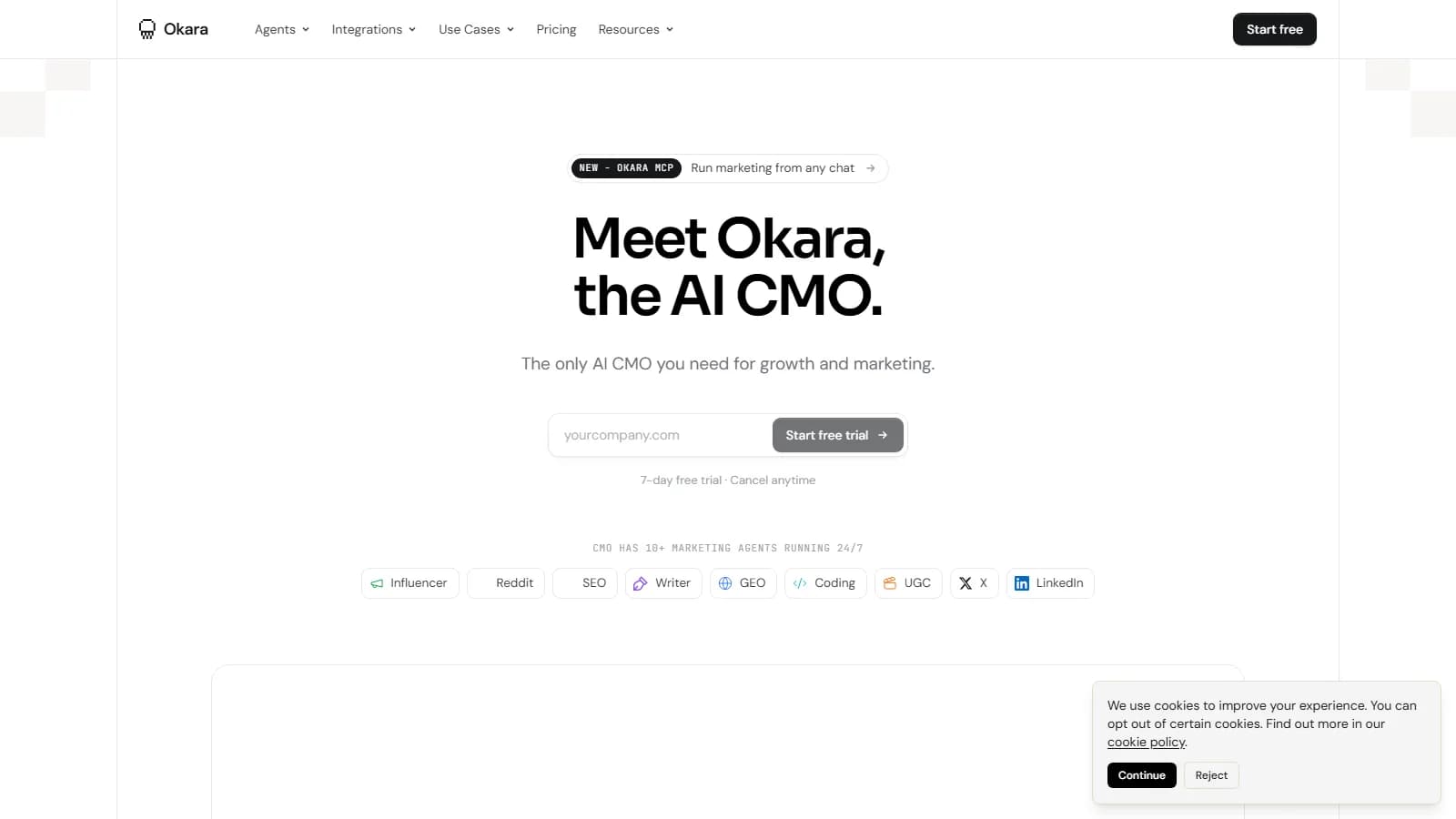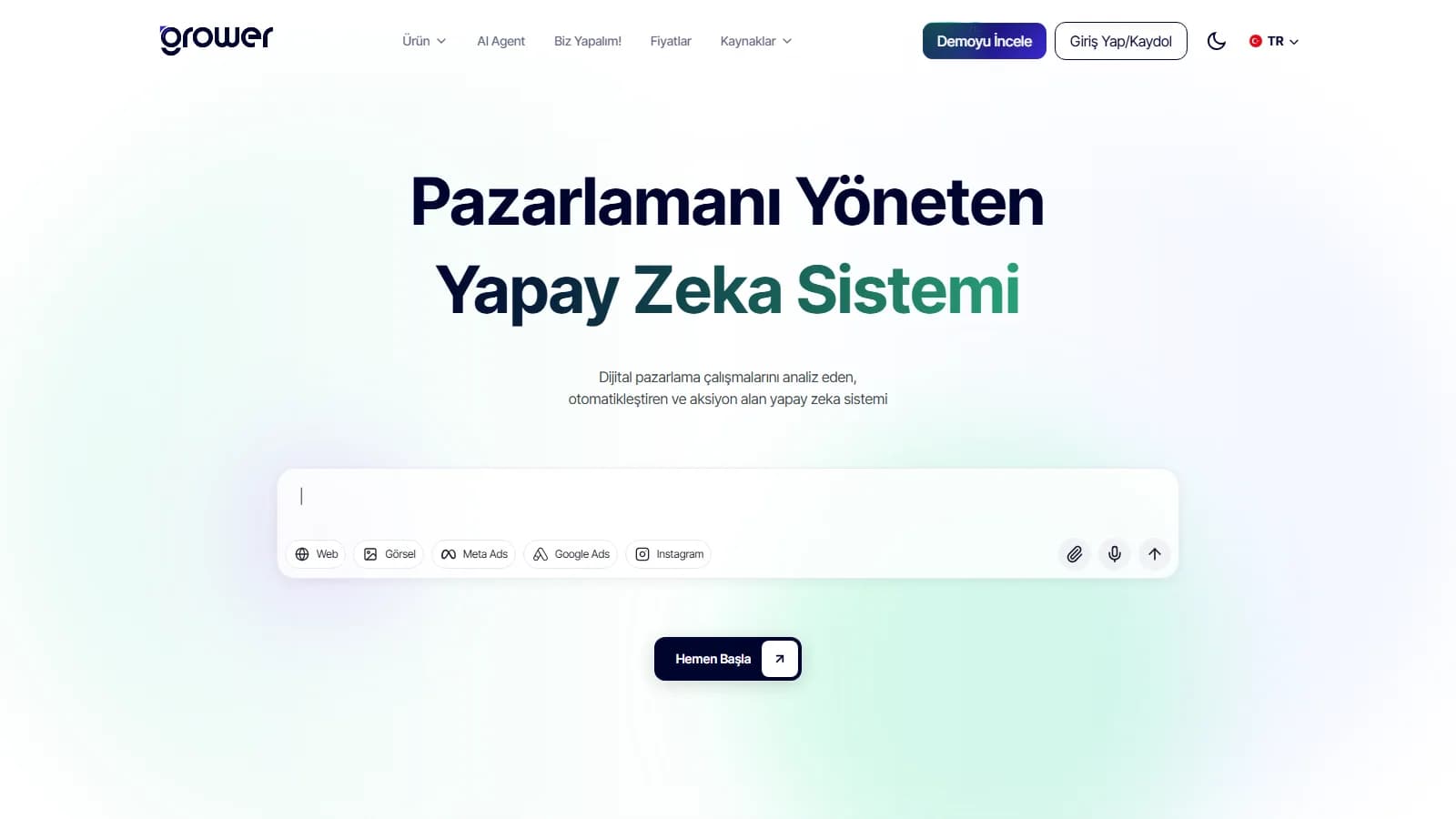
The AI CMO is an artificial intelligence-driven marketing operating system that consolidates enterprise channels under a unified architectural framework, executing workflows from paid creative generation to customer messaging through autonomous agents. By bridging disparate data pipelines, the platform minimizes operational friction across budget allocation and content distribution.
Engineering Summary
Operating beyond traditional rule-based automations, The AI CMO deploys a multi-agent architecture capable of identifying micro-shifts in customer behavior and triggering cross-channel remediation. The platform connects enterprise data warehouse layers directly to ad networks and messaging APIs, eliminating data silos. For audit and compliance, it maintains a deterministic log that records the technical rationale behind every operational decision.
Why It Hit the Radar: Production Story
As organizations scale, marketing infrastructure fractures rapidly: dedicated point solutions for ad bidding, separate CRMs for lifecycle email, standalone platforms for inbound support, and protracted data engineering sprints required to reconcile discrepancies. Even routine weekly budget adjustments demand hours of manual extraction and analysis. The AI CMO resolves this operational bottleneck. By establishing a unified data layer, it converts a single campaign brief simultaneously into ad variants, lifecycle sequences, targeting rules, and dynamic landing pages. Furthermore, it tracks account health in real time, identifying high-churn risk accounts before quarterly performance drops.
Under the Hood: Architecture, UX, and Tech Stack
The front-end interface integrates Tailwind CSS with interactive Three.js and Canvas visualizations for pipeline monitoring. Beneath the presentation layer runs a data consolidation engine connecting customer touchpoints—web properties, CRM instances, and e-commerce backends—at the SQL and API levels. When structuring content and acquisition paths, marketing teams can align conversion funnels with Kling Digital performance marketing solutions. Additionally, teams safeguarding organic discovery can cross-examine platform analytics with an enterprise GEO audit tool to diagnose technical visibility gaps. For comparative architectural benchmarks regarding agentic content distribution, read our Okara AI review to see how divergent orchestration models tackle generation pipelines. The primary technical strength of The AI CMO remains its auditability: every interaction, recipient trigger, and currency unit allocated is recorded in a verifiable telemetry log.
| Evaluation Metric | Traditional Manual Operations | The AI CMO Implementation |
|---|---|---|
| Data Integration | Protracted ETL pipelines and custom warehouse setup | Unified schema mapping systems without custom code |
| Execution Latency | Weekly status calls and manual spend reallocation | Autonomous weekly plans with instant approval cycles |
| Creative Adaptation | Disjointed asset production across individual platforms | Multi-format generation across channels from one brief |
| Inbound Communications | Fragmented customer care teams across shifts | Autonomous 24/7 agents aligned with brand voice |
Production Verdict: When to Deploy vs. Avoid
The AI CMO delivers measurable leverage for B2B and e-commerce enterprises running multi-channel acquisition where teams face substantial data fragmentation and manual reporting overhead. Conversely, early-stage ventures without validated product-market fit, companies with minimal customer records, or operations managing ad budgets under a few hundred dollars per month will find the infrastructure overly complex and cost-prohibitive.
Kling Digital Architecture Note
When implementing autonomous agent systems like The AI CMO, enterprise architects must establish bidirectional synchronization between platform opt-out registries and the primary CRM. Although internal exclusion routines are strict, deploying an external webhook monitor ensures complete regulatory compliance without processing latency.