
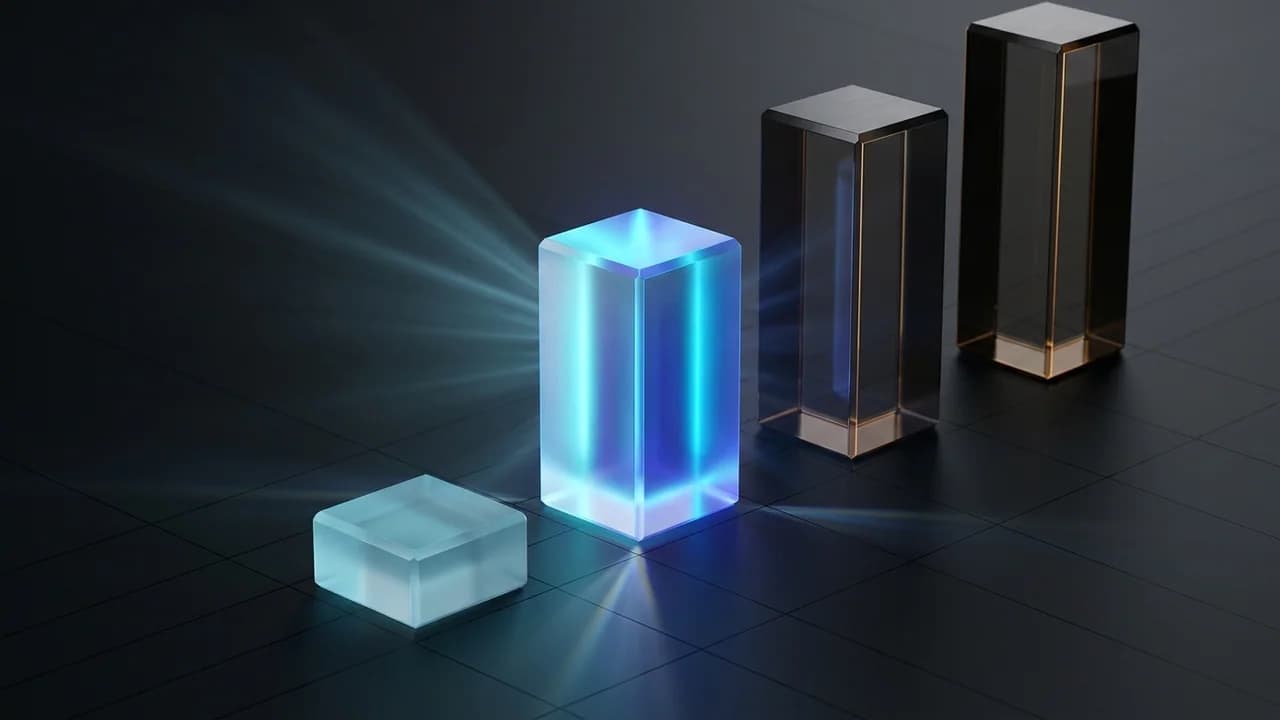
Every production engineering team deploying autonomous coding agents runs into the exact same architectural bottleneck: ultra-fast economy models blaze through routine scaffolding but lose coherence across multi-file refactors, while heavyweight frontier reasoning models nail root causes yet stall iteration loops with higher latency and ballooning thinking-token bills. On November 18, 2026, Google shipped Gemini 4 Neon (gemini-4-neon) specifically to occupy that middle-upper sweet spot.
Gemini 4 Neon sits squarely between speed-first Gemini 4 Hydrogen and flagship frontier models Gemini 4 Argon and Gemini 4 Carbon inside Google's periodic-table-inspired Gemini 4 generation. Priced at $3.00 per million input tokens and $15.00 per million output tokens, it combines a 1,048,576-token unified context window, up to 1M-token Long Decode outputs, and four granular reasoning depths (low, medium, high, xhigh) to deliver what Google positions as near-Carbon intelligence at Flash-class execution velocity.
Executive Summary & Architectural Takeaways
- Four-Tier Elemental Ladder Complete: In under two months (late September to November 18, 2026), Google rolled out Argon, Carbon, Hydrogen, and Neon, replacing legacy Flash/Pro marketing labels with a clear atomic-weight hierarchy.
- Mind the December 1, 2026 Pricing Crossover: Through November 30, 2026,
gemini-4-argonandgemini-4-carbonremain on an introductory $2.00 / $10.00 rate—temporarily cheaper than Neon's $3.00 / $15.00. On December 1, 2026, Argon and Carbon step up to $4.00 / $20.00, placing Neon cleanly 25% below flagship rates and 2x Hydrogen ($1.50 / $7.50). - Zero Long-Context Price Cliff: Unlike OpenAI's GPT-6.2 family—which applies a long-context multiplier once prompts cross 272,000 input tokens—Gemini 4 bills its entire 1M unified context window under flat per-token pricing.
For CTOs and platform leads designing enterprise AI integrations and multi-agent custom software engineering pipelines, picking a model is no longer a one-dimensional leaderboard contest—it is a unit-economics and latency-routing problem. Below, we dissect Gemini 4 Neon's specifications, compare all four Gemini 4 tiers, and benchmark the ecosystem against OpenAI GPT-6.2 and Anthropic Claude 5.5 / Fable 5.2 using strictly verified November 2026 primary data.
1. Why Google Moved to Elemental Naming: Inside the Gemini 4 Lineup
Legacy labels like "Flash", "Pro", and "Ultra" blurred the distinction between raw generation speed and internal reasoning compute. Google's Gemini 4 generation maps each tier to an element from the periodic table, signaling compute density and task horizon at a glance:
- Gemini 4 Hydrogen (
gemini-4-hydrogen— Nov 12, 2026): The high-velocity daily driver succeeding previous Flash tiers. At $1.50 input / $7.50 output per 1M tokens, it handles high-volume subagent delegation, rapid code scaffolding, and low-latency tool calls. - Gemini 4 Neon (
gemini-4-neon— Nov 18, 2026): Built directly atop Hydrogen's fast execution backbone with substantially deeper reasoning layers. At $3.00 / $15.00, Neon bridges multi-file software engineering, complex API orchestration, and long-context knowledge synthesis without full frontier overhead. - Gemini 4 Argon (
gemini-4-argon— announced Sept 30, GA Oct 2026): The first generally available Gemini 4 reasoning release onai.google.dev, introducing the unified 1M input/thinking/output window and 1M Long Decode generation. - Gemini 4 Carbon (
gemini-4-carbon— Nov 10, 2026): Google's heavyweight frontier flagship engineered for deep architectural reasoning, scientific problem solving, and industry-leading cybersecurity defense and vulnerability patching loops.
2. Gemini 4 Neon Specifications: Unified 1M Context, Long Decode & XHigh Reasoning
What makes Gemini 4 Neon stand out from traditional mid-tier models is that Google did not strip away enterprise modalities or context ceilings to hit a lower price point:
- 1,048,576-Token Unified Context Pool: Input tokens, internal thinking tokens, and output tokens share one continuous 1M window—letting agents ingest entire monorepos, RFC specs, and production telemetry logs in a single pass.
- Long Decode Output up to 1M Tokens: While standard segments cap at 64K tokens, Long Decode via the Interactions API and GenerateContent unlocks single-turn outputs scaling past 64K up to 1M tokens minus input—crucial for large-scale migrations, comprehensive test suites, and structured multi-file synthesis.
- Four Granular Thinking Controls (
low,medium,high,xhigh): Teams can dial reasoning compute dynamically per request. Defaulthighbalances latency and accuracy for everyday engineering, whilexhighunleashes deep verification loops for race conditions, distributed locks, and security audits. - Native Multimodal + Office Document Ingestion: Processes text, images, audio, video, PDFs, and native Office/OpenDocument files (
.docx,.xlsx,.pptx) directly without fragile external OCR or parser middleware. - Built-In Agentic Tooling & Stateful Sessions: Supports native code execution, function calling, Computer Use, file search, Google Search/Maps grounding, and server-side multi-turn state persistence (
store=Truefor up to 7 days via the Interactions API).
The Nov 30 -> Dec 1 Pricing Anomaly & Thinking-Token Output Trap
According to Google's official Gemini API Pricing schedule, Argon and Carbon remain on a promotional introductory tariff of $2.00 input / $10.00 output through November 30, 2026. During this short window, Neon ($3.00 / $15.00) actually costs more per token than Carbon—until December 1, 2026, when Argon and Carbon double to their $4.00 / $20.00 standard rate. Second, remember that all internal thinking tokens are billed as output tokens ($15/1M). Defaulting simple extraction endpoints to xhigh can silently burn thousands of hidden reasoning tokens per request.
3. Gemini 4 Internal Comparison Matrix: Hydrogen vs. Neon vs. Argon vs. Carbon
Below is the verified technical comparison across all four Gemini 4 models using official Google documentation, Vertex AI Model Garden SKU specs, and published third-party benchmarks:
| Dimension | Gemini 4 Hydrogen | Gemini 4 Neon | Gemini 4 Argon | Gemini 4 Carbon |
|---|---|---|---|---|
| Model ID | gemini-4-hydrogen | gemini-4-neon | gemini-4-argon | gemini-4-carbon |
| Release Date | Nov 12, 2026 | Nov 18, 2026 | Sept 30 / Oct 2026 | Nov 10, 2026 |
| Core Positioning | Speed & cost (Flash successor) | Near-Carbon reasoning + high speed | Pioneer frontier reasoning | Flagship frontier & cybersecurity |
| Context / Max Output | 1M unified / 1M Long Decode | 1M unified / 1M Long Decode | 1M unified / 1M Long Decode | 1M unified / 1M Long Decode |
| Thinking Effort Levels | Low / Med / High / XHigh | Low / Med / High / XHigh | Configurable thinking | Exhaustive verification loops |
| API Price (through Nov 30) | $1.50 / $7.50 | $3.00 / $15.00 | $2.00 / $10.00 (intro) | $2.00 / $10.00 (intro) |
| Standard Price (Dec 1, 2026+) | $1.50 / $7.50 | $3.00 / $15.00 | $4.00 / $20.00 | $4.00 / $20.00 |
| AA Intelligence Index v5.0 | 51 (High) — 54 (XHigh) | Independent eval pending | 50 — 53 | 59 (High) |
| Terminal-Bench 4.0 / 4.1 | 54.0% — 56.4% | Independent eval pending | 55.5% — 57.1% | 64.5% — 65.2% |
| Signature Strength | Subagent execution, daily coding | Multi-file coding & balanced agents | Long-context analysis | SEC-bench Pro 88.2%, CWE 71.0% |
Benchmark Verification & Zero-Fabrication Editorial Policy
Because Gemini 4 Neon rolled out on November 18, 2026—and public ai.google.dev model pages update progressively—independent third-party scores from Artificial Analysis and Terminal-Bench for gemini-4-neon are still being published. In accordance with Kling Digital engineering standards, we never extrapolate or fabricate unreleased benchmark figures; all numerical scores above reflect verified published runs for Hydrogen, Argon, and Carbon, and Neon's verified cells will be updated once independent runs finalize.
4. Cross-Vendor Showdown: Gemini 4 Neon vs. OpenAI GPT-6.2 & Anthropic Claude 5.5 / Fable 5.2
By November 2026, all three frontier AI labs have converged around the 1-million-token context window. Yet major architectural differences persist in max output ceilings, long-context pricing cliffs, and cost per reasoning loop:
| Model | Provider | Context Window | Max Output | Long-Context Price Cliff | API Price (1M In / Out) | Cached Input | Best Production Fit |
|---|---|---|---|---|---|---|---|
| Gemini 4 Neon | 1,048,576 unified | 1M (Long Decode) | None (flat to 1M) | $3.00 / $15.00 | Implicit discount | Long-context agents, multimodal & >128K output | |
| Gemini 4 Hydrogen | 1,048,576 unified | 1M (Long Decode) | None | $1.50 / $7.50 | Implicit discount | High-volume subagents, fast everyday coding | |
| Gemini 4 Carbon | 1,048,576 unified | 1M (Long Decode) | None | $4.00 / $20.00 (Dec 1+) | $0.20 (Dec 1+) | Security auditing, hardest architectural bugs | |
| GPT-6.2 Sol | OpenAI | ~1,050,000 | 128K | Multiplier >272K input | $2.00 / $10.00 | ~$0.10 | Mid-context coding, strict JSON & tool calling |
| GPT-6.2 Astra | OpenAI | ~1,050,000 | 128K | Multiplier >272K input | $8.00–$10.00 / $40.00–$50.00 | ~$1.00 | Hardest STEM/math & top-tier enterprise logic |
| Claude Sonnet 5.5 | Anthropic | 1,000,000 | 128K | None (flat 1M) | $2.00 / $10.00 | ~$0.10 | Everyday full-stack development & fast PRs |
| Claude Opus 5.5 / Fable 5.2 | Anthropic | 1,000,000 | 128K | None (flat 1M) | $8.00–$10.00 / $40.00–$50.00 | ~$0.20 | Terminal-Bench precision & deep refactoring |
Four Key Engineering Conclusions From the Cross-Vendor Matrix
- Mid-Tier Pricing vs. Long-Context & Output Ceilings: For prompts under 100K tokens, OpenAI GPT-6.2 Sol ($2/$10) and Anthropic Claude Sonnet 5.5 ($2/$10) undercut Gemini 4 Neon ($3/$15) on base token price. The economics flip sharply once agentic sessions exceed 272K input tokens (where OpenAI's long-context multiplier triggers) or require outputs exceeding 128K tokens (where both GPT-6.2 and Claude 5.5 hit hard ceilings while Neon streams up to 1M via Long Decode).
- 60%–70% Savings Versus Frontier Heavyweights: Compared to GPT-6.2 Astra ($8–$10 / $40–$50) and Claude Opus 5.5 / Fable 5.2 ($8–$10 / $40–$50), both Gemini 4 Neon ($3/$15) and post-December Gemini 4 Carbon ($4/$20) slash total expenditure across multi-turn iterative debugging loops.
- Agentic Harnesses & MCP Orchestration: Anthropic's Opus 5.5 / Fable 5.2 tier continues to excel in surgical CLI/terminal benchmarks (Terminal-Bench), whereas Google's multi-model Orchestrator pattern (pairing Carbon or Neon for architectural planning with Hydrogen workers in Antigravity and MCP server pipelines) narrows the accuracy gap while cutting wall-clock time.
- Native Multimodal & Search/Maps Grounding: Ingesting video, audio, PDFs, and Office spreadsheets alongside live Google Search/Maps grounding eliminates extra ETL layers in data-heavy automation stacks like Claude and Meta Ads MCP workflows.
5. Production Model Routing Playbook for Engineering Teams
Rather than hardcoding one model across every endpoint, route workloads dynamically by context depth, latency budget, and blast radius:
| Production Scenario | Recommended Model & Effort | Architectural Rationale |
|---|---|---|
| Multi-file Next.js / TypeScript feature delivery | Gemini 4 Neon (high) or Claude Sonnet 5.5 | Preserves cross-file type safety and schema alignment without frontier latency. |
| Distributed race conditions, DB deadlocks, security bugs | Gemini 4 Neon (xhigh) or Gemini 4 Carbon | Expands verification depth before emitting patches. |
| 300K+ token monorepo audits, video/PDF ingestion | Gemini 4 Neon or Hydrogen | Flat 1M unified context pricing with zero 272K surcharge. |
| Vulnerability discovery & automated security patching | Gemini 4 Carbon or Claude Opus 5.5 | Backed by 88.2% SEC-bench Pro and 71.0% CWE-bench performance. |
| High-volume classification, parallel subagent workers | Gemini 4 Hydrogen (low/medium) | Lowest cost ($1.50/$7.50) and fastest token throughput. |
| Strict-schema ERP / CRM function calling (<100K ctx) | GPT-6.2 Sol or Gemini 4 Neon (medium) | Aggressive cached input discounts and predictable structured outputs. |
Building Resilient Multi-Model AI Systems & GEO Visibility
Productionizing Gemini 4 Neon requires more than swapping a model string—it demands per-route thinking budgets, prompt-caching hygiene, automatic provider fallbacks, and zero-trust PII redaction. Audit how your brand appears across AI search engines using our free AI & GEO Search Audit, estimate your custom engineering scope via the project cost calculator, or connect directly with the Kling Digital engineering team.
6. Pre-Production Migration Checklist
Before switching live traffic to gemini-4-neon, verify these four operational safeguards:
- Segment Thinking Levels by Endpoint: Cap classification and translation routes at
low/medium, reservehighfor code generation, and triggerxhighstrictly on escalation or complex review paths. - Instrument
thoughtsTokenCountTelemetry: Track internal reasoning tokens separately in your observability stack—remember they bill at the $15/1M output tier. - Automate the December 1, 2026 Routing Shift: If you are leveraging Argon/Carbon's $2/$10 promotional rate through November 30, schedule feature-flag routing rules to shift mid-complexity workloads to Neon ($3/$15) and Hydrogen ($1.50/$7.50) on December 1.
- Verify Against Official Docs: Monitor endpoint availability, quotas, and regional updates via the official Gemini API Models Documentation and Google AI Blog.
Ultimately, Gemini 4 Neon represents Google's clearest answer yet to the enterprise speed-versus-reasoning dilemma—offering unified 1M-token headroom, Long Decode scale, and tunable XHigh depth at a fraction of heavyweight frontier pricing.