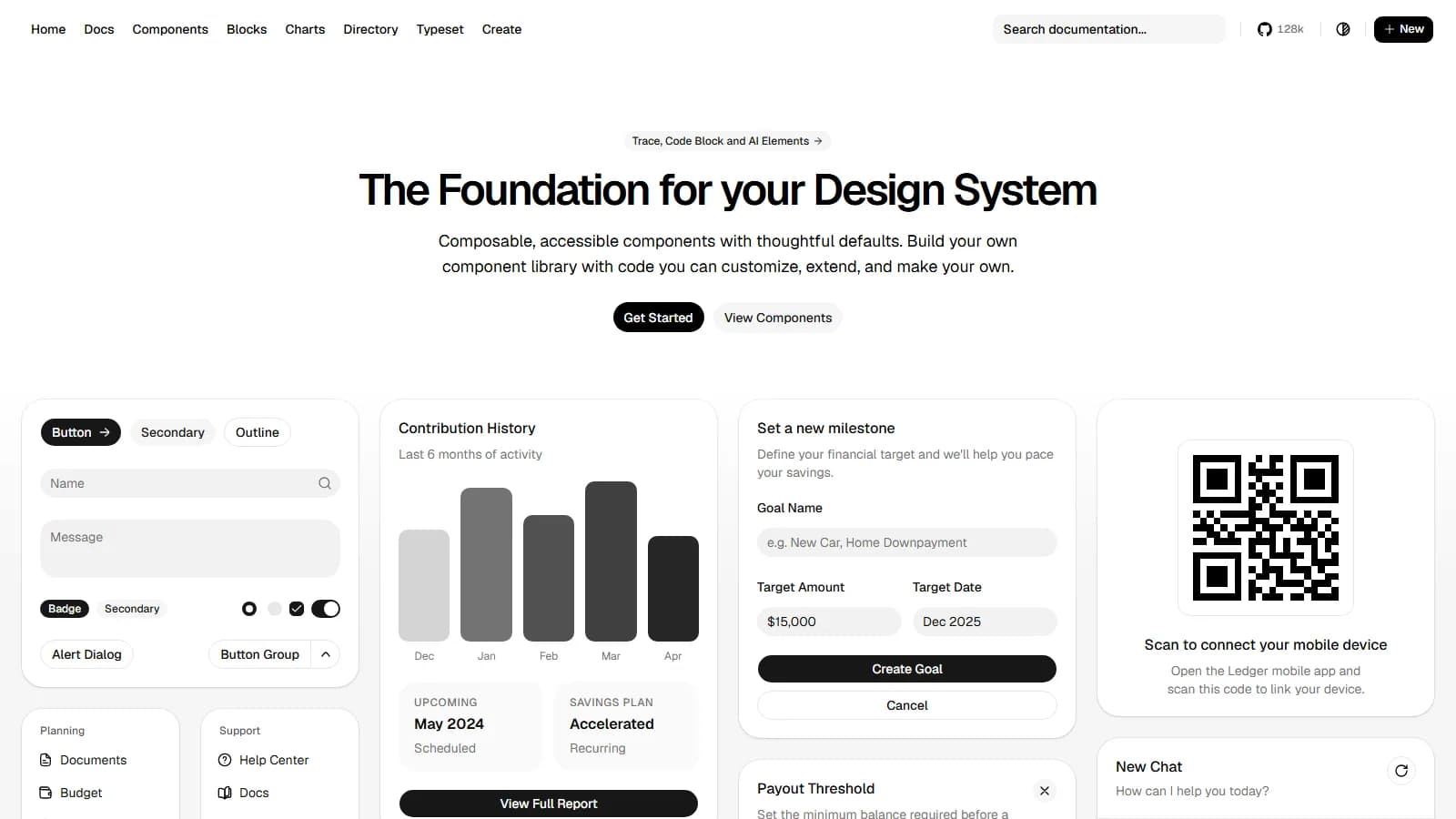
Astryx is the open-source release of the enterprise design system matured inside Meta's engineering ecosystem over the past eight years, powering over 13,000 production applications across the company. Currently in public beta, the platform pairs React 19 with StyleX to focus on compile-time atomic style generation, redefining performance benchmarks for modern front-end architectures.
Engineering Summary
Astryx does not follow the Tailwind CSS path. It is built strictly on StyleX, Meta's zero-runtime CSS-in-JS solution. Distributed under @astryxdesign/react, it provides over 180 accessible components and includes a dedicated CLI enabling AI coding agents to query documentation directly from the terminal.
Why Is It on the Radar? Real Production Lineage
As component libraries expand in large-scale web applications, unchecked CSS bloat and styling specificity conflicts become severe bottlenecks. Meta addressed this eight years ago by building an internal design foundation. Today, released in public beta as Astryx, the system has proven its resilience under the stress of 13,000+ real-world production projects across Meta's extensive product portfolio.
Showcase demos—such as a minimalist clock, a croissant configurator, and an AI studio interface—demonstrate that the library excels beyond data-heavy admin grids, serving interfaces with demanding visual fidelity. For modern enterprises planning scalable interface architecture, the type safety, strict design tokens, and minimal memory footprint sought in enterprise UI/UX design systems form the core backbone of Astryx.
Under the Hood: Architecture, Interactions, and Tech Stack
At the center of Astryx sits the compilation dynamics of React 19 and StyleX. Unlike legacy CSS-in-JS solutions, StyleX resolves component styles at compile time, outputting atomic CSS classes. Consequently, the browser runtime incurs zero injection cost; even as the DOM tree expands, CSS bundle size stabilizes on a flat plateau.
A standout feature of the system is its "Agent-Ready" design. Recognizing the friction of scraping front-end documentation for AI workflows, Meta went beyond simply providing an llms.txt standard. Developers and autonomous coding agents can run npx @astryxdesign/cli docs, npx @astryxdesign/cli search, and npx @astryxdesign/cli component --list to pull component variants, accessibility rules, and prop contracts directly from the terminal as structured JSON or formatted text.
| Architectural Parameter | Astryx Design System | Conventional Libraries (e.g., shadcn/ui) |
|---|---|---|
| CSS Engine | Meta StyleX (Compile-time atomic CSS) | Tailwind CSS (Compile-time utility classes) |
| Runtime Cost | Zero runtime overhead | Zero runtime overhead (via CSS classes) |
| Core Framework | React 19+ | React 18+ / React 19 |
| Component Count | 180+ integrated enterprise components | Community and Radix-based modular primitives |
| Agent Integration | Integrated CLI queries and llms.txt | llms.txt and direct repository inspection |
When to Use and When to Avoid in Production
Astryx is an ideal choice for complex enterprise dashboards spanning hundreds of views, SaaS platforms requiring strict visual consistency, and portals where Core Web Vitals are paramount. In environments where loading latency is critical, evaluating your current setup with a speed analyzer tool will clearly highlight the zero-runtime advantages provided by StyleX.
Conversely, if your current tech stack is deeply anchored in Tailwind CSS or relies on legacy dependencies incapable of upgrading to React 19, adopting Astryx introduces a steep migration cost. If your team prefers copying individual component code directly into the repository, explore our shadcn/ui architecture review for an alternative model. Furthermore, remember that Astryx is currently in public beta, meaning internal contracts may receive minor breaking updates before reach final stable release.
Kling Digital Architecture Note
When rolling out Astryx across large engineering teams, wire @astryxdesign/cli into your CI/CD pipelines and local LLM context providers. Enabling code completion agents to pull canonical prop schemas directly prevents invalid component usage before reaching compile checks.